

Untangling the Manosphere is a professional learning prototype designed to help school staff understand online misogyny, recognise its impact in schools and respond safely and proportionately.

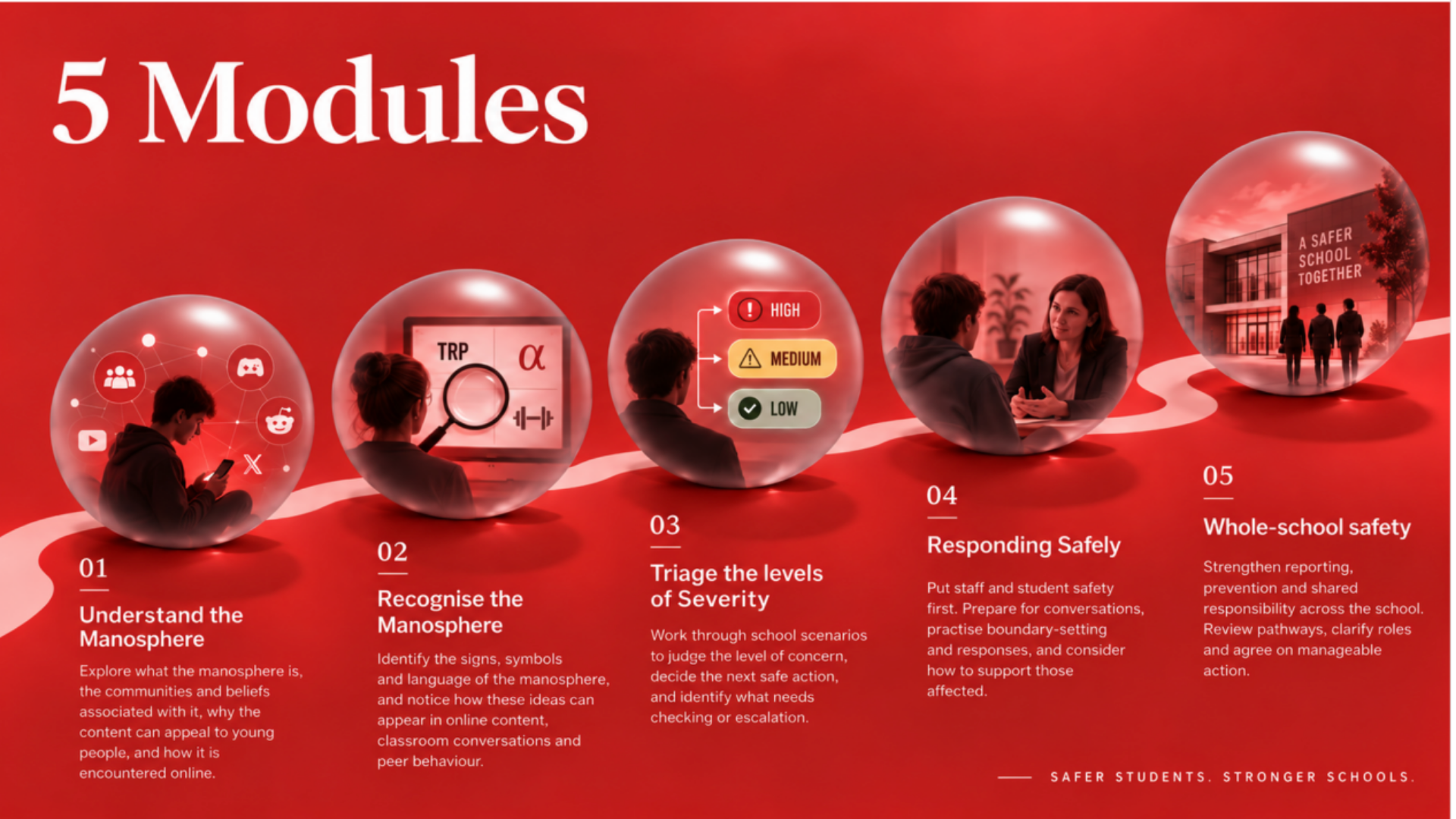
A professional-learning prototype within a five-module course for understanding and responding to the manosphere in Australian schools.
Untangling the Manosphere in Australian Classrooms is a self-initiated professional-learning project for teachers, support staff and school leaders.
Research synthesis · Learning architecture · Instructional design · UX/UI · Scenario design · Resource development
Prototype developed · Five-module course mapped for future production and validation
Online misogyny can surface in classroom language, peer behaviour and school culture.
Educators need help recognising what is happening without making assumptions or responding alone.
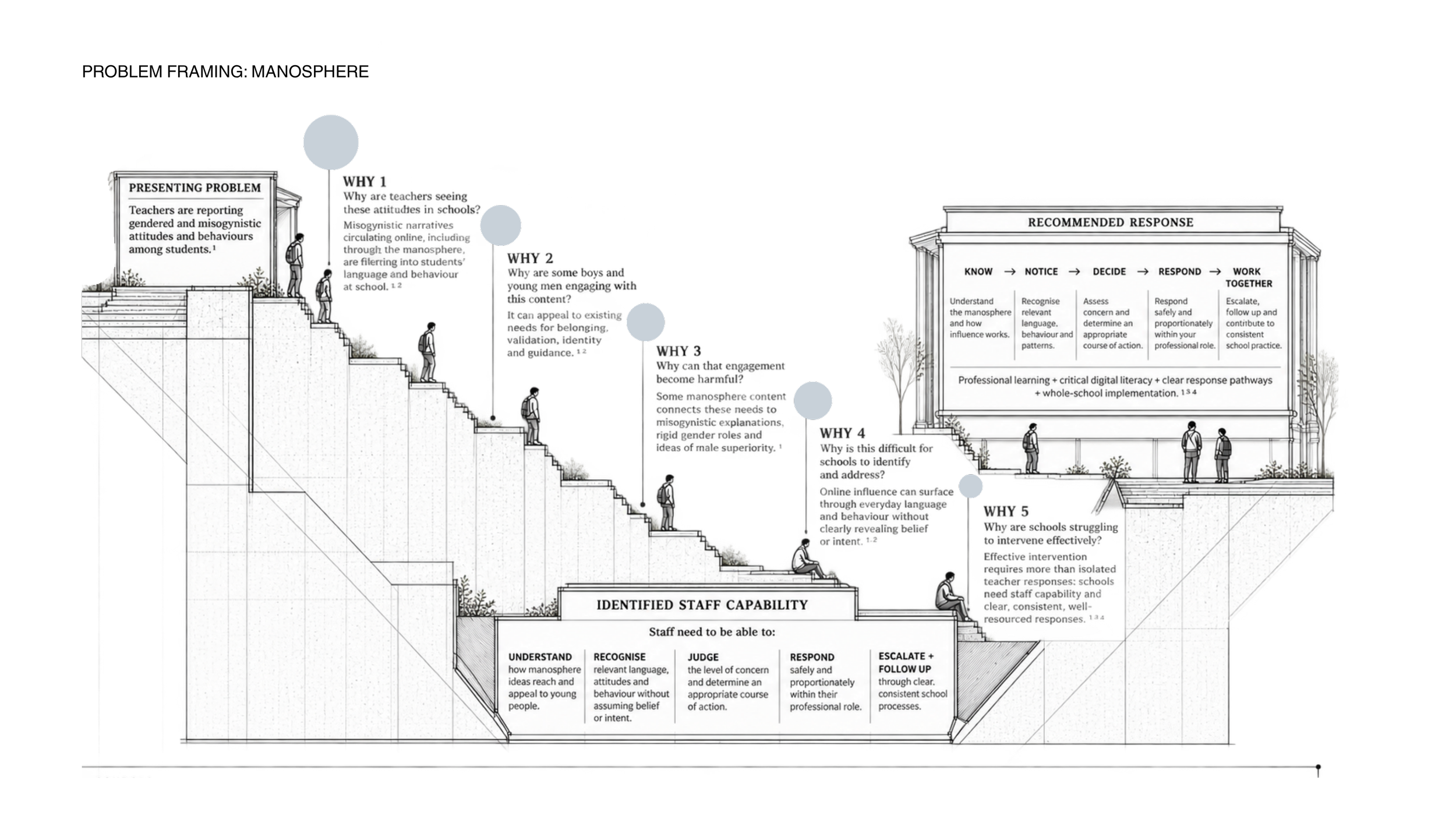
The course supports classroom teachers, support staff and school leaders.
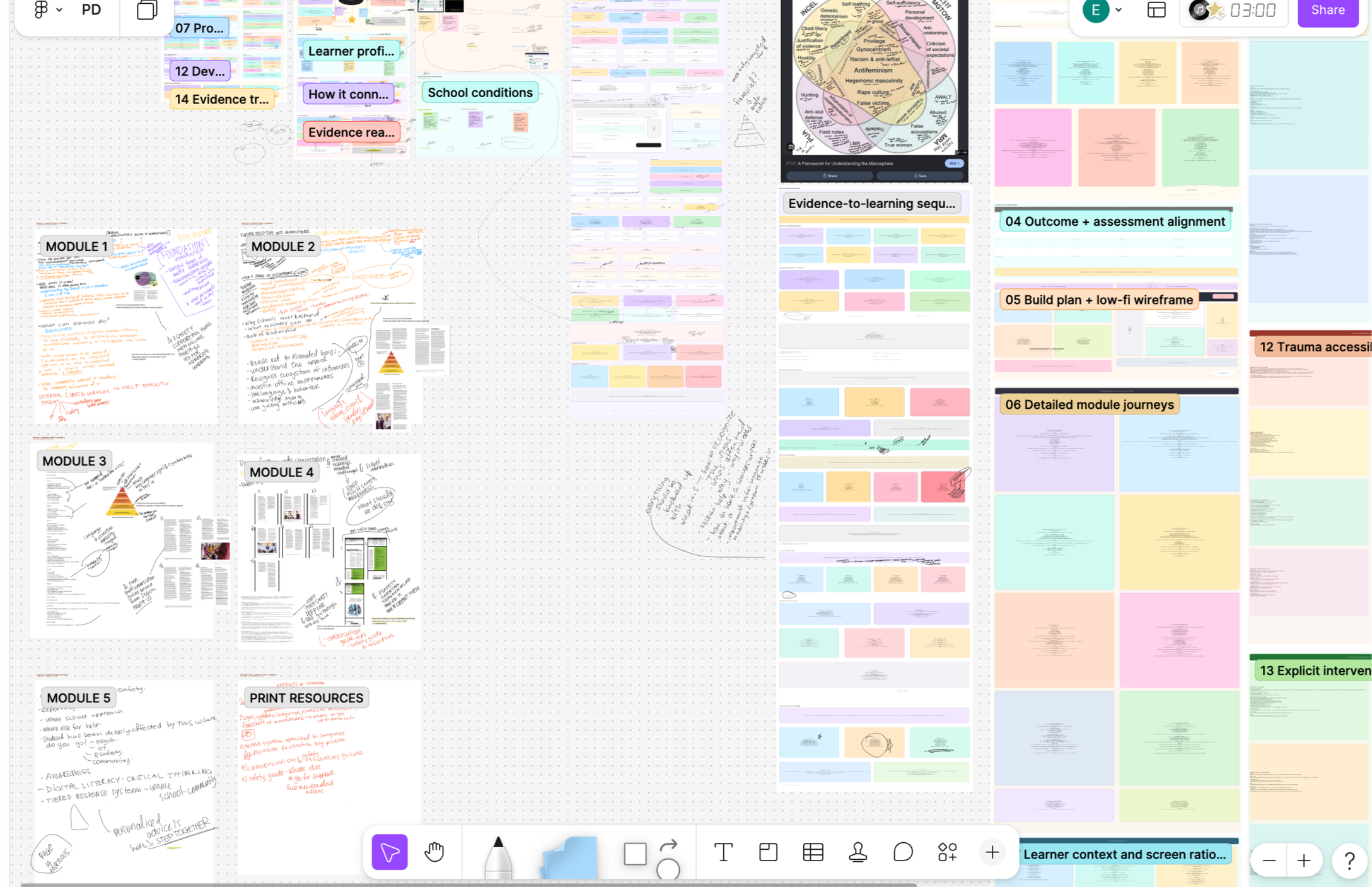
Learner profiles shaped the language, scenarios, navigation, role boundaries and practical resources.
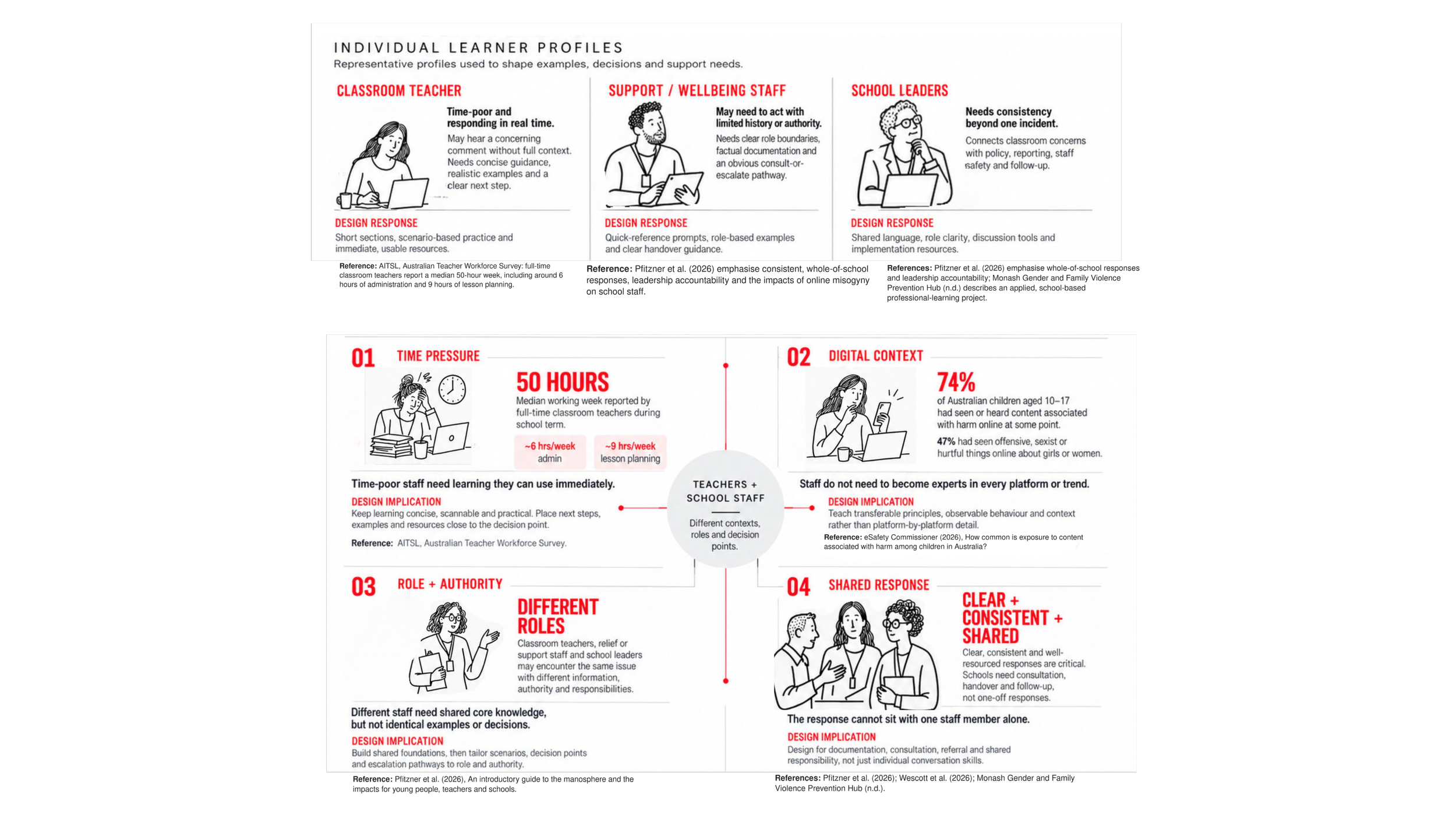
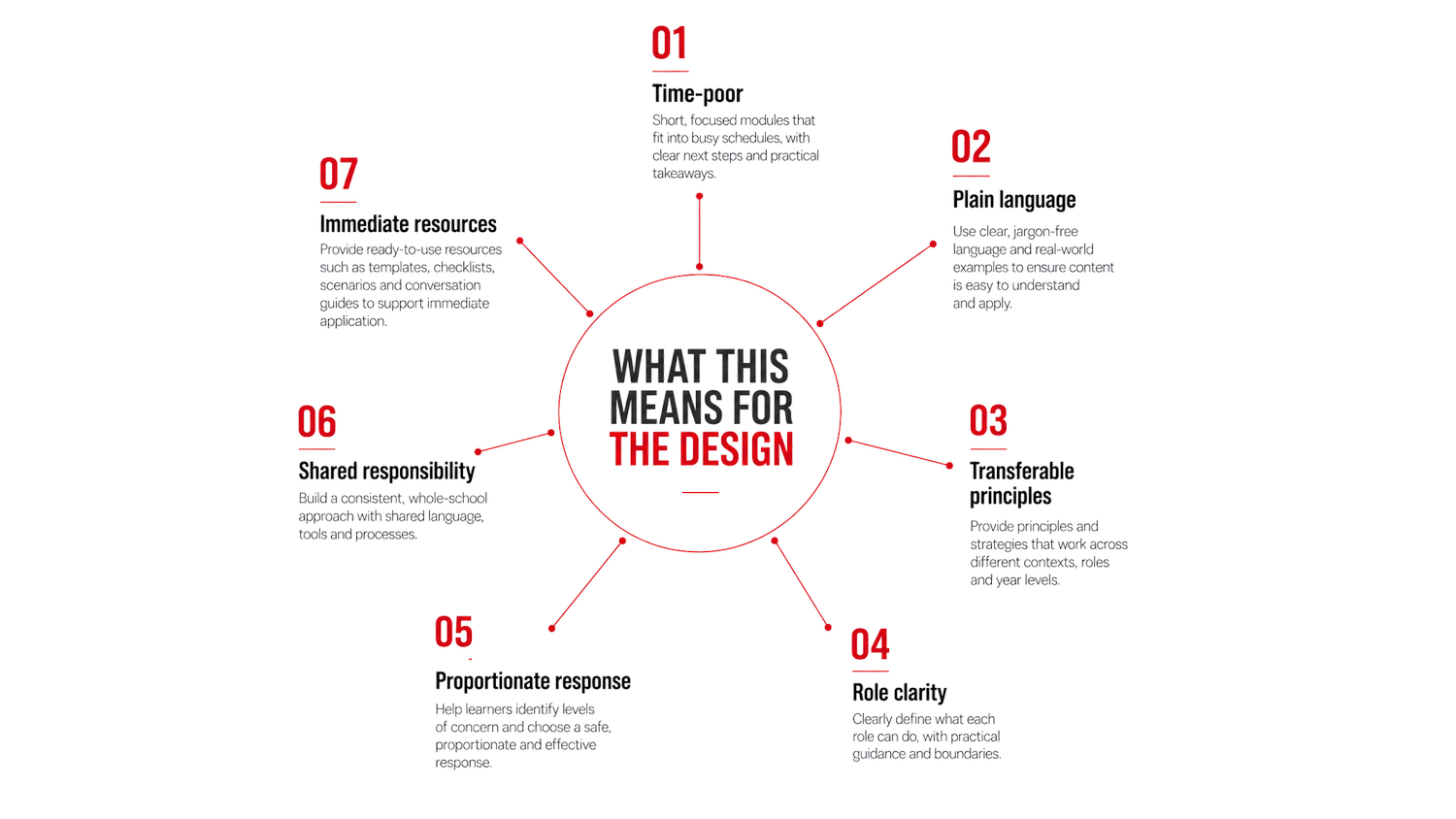
The course follows a clear capability pathway.
Learners build understanding before moving into judgement, action and shared school practice.
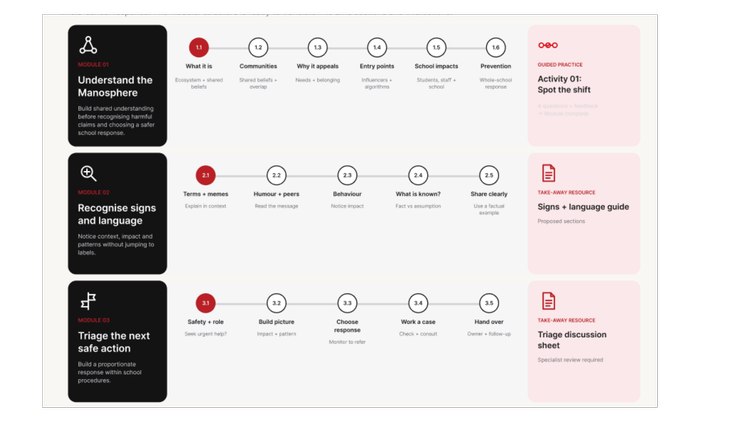
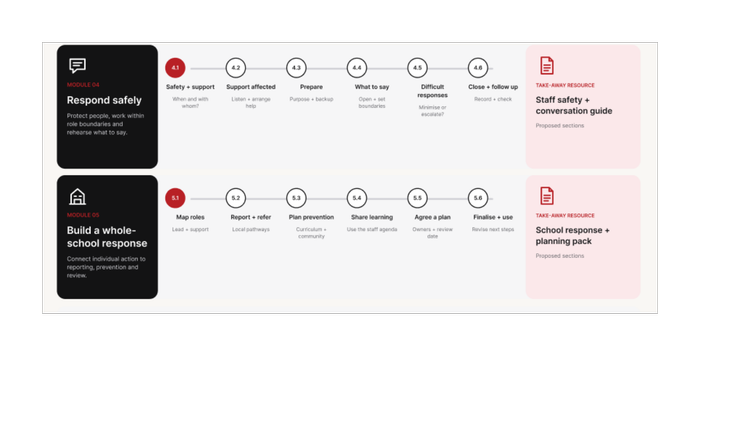
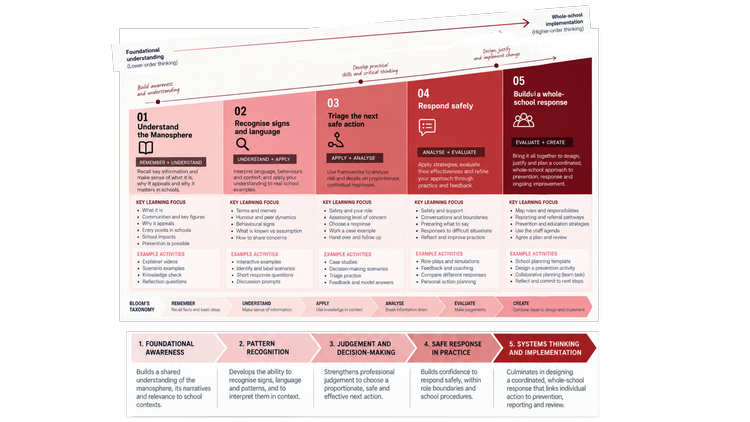
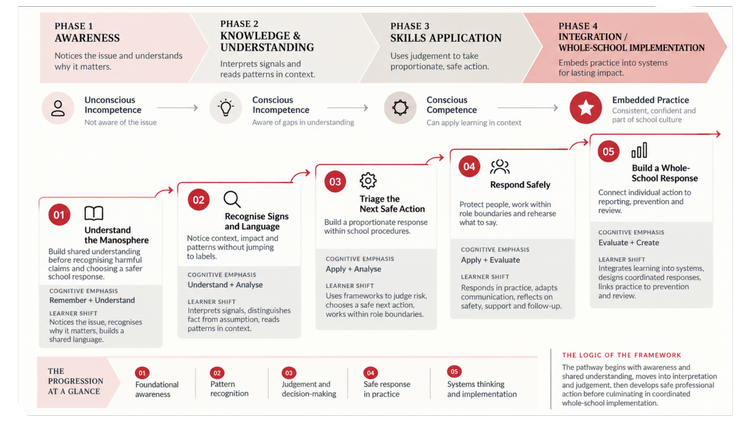
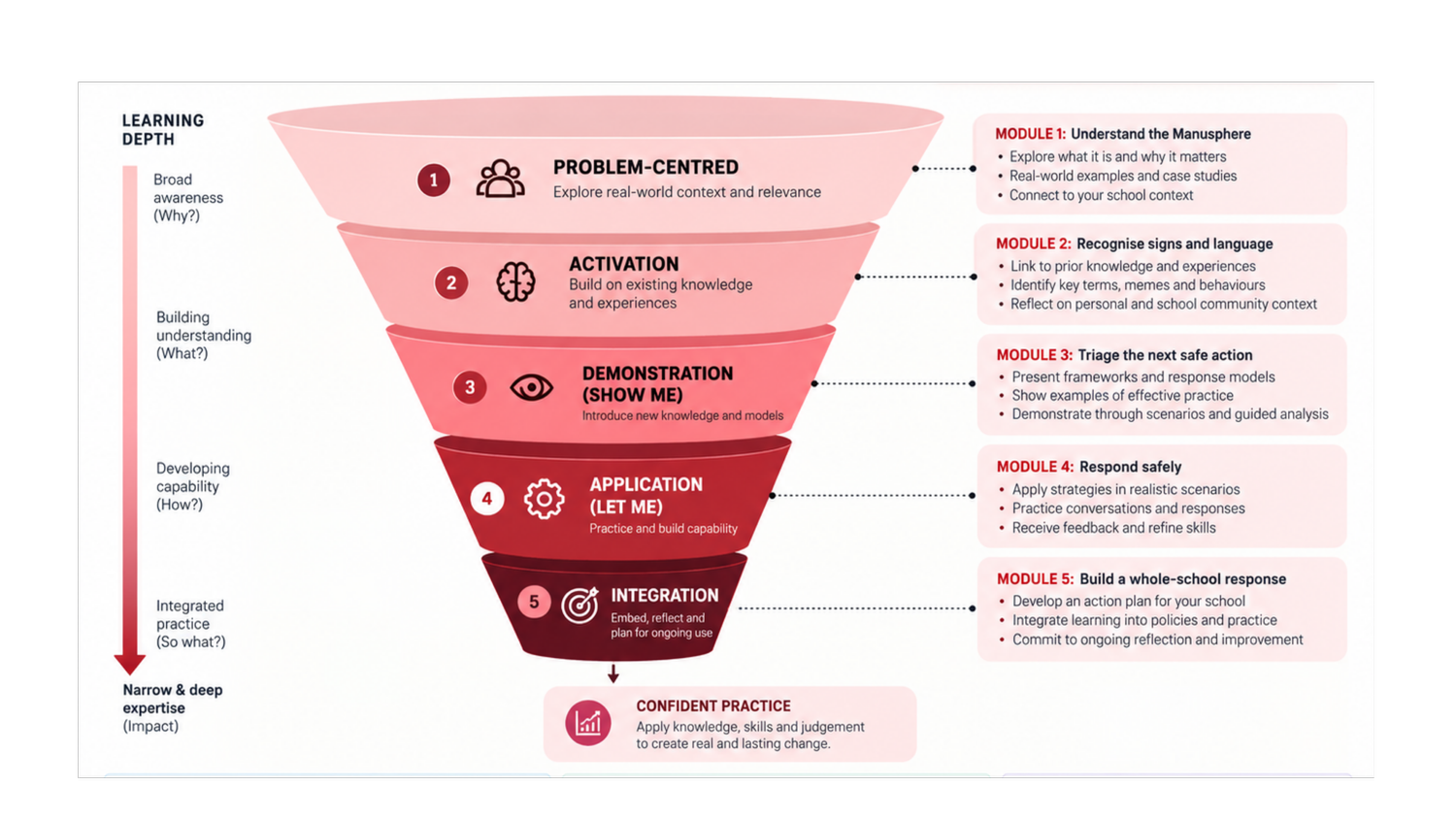
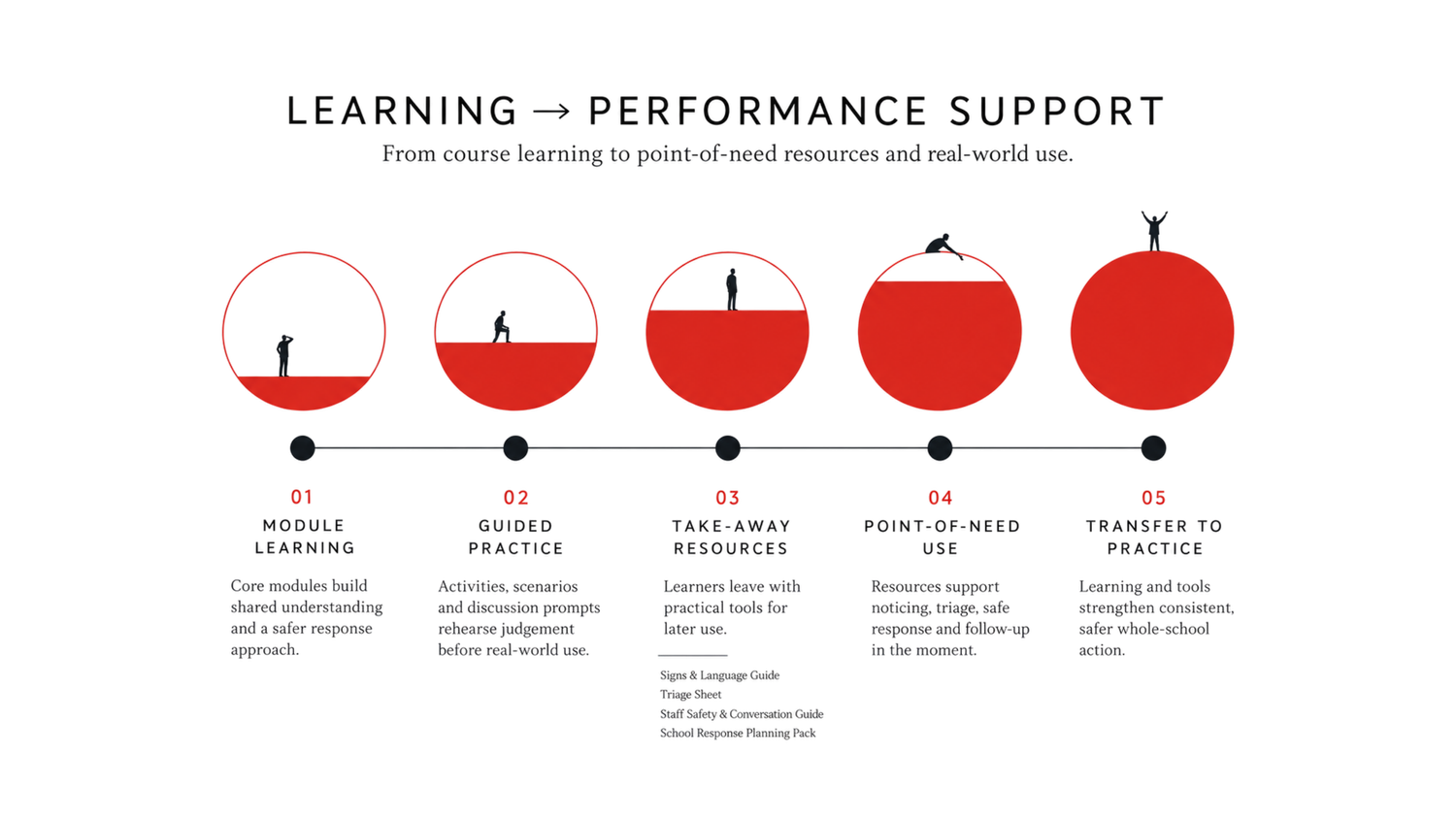
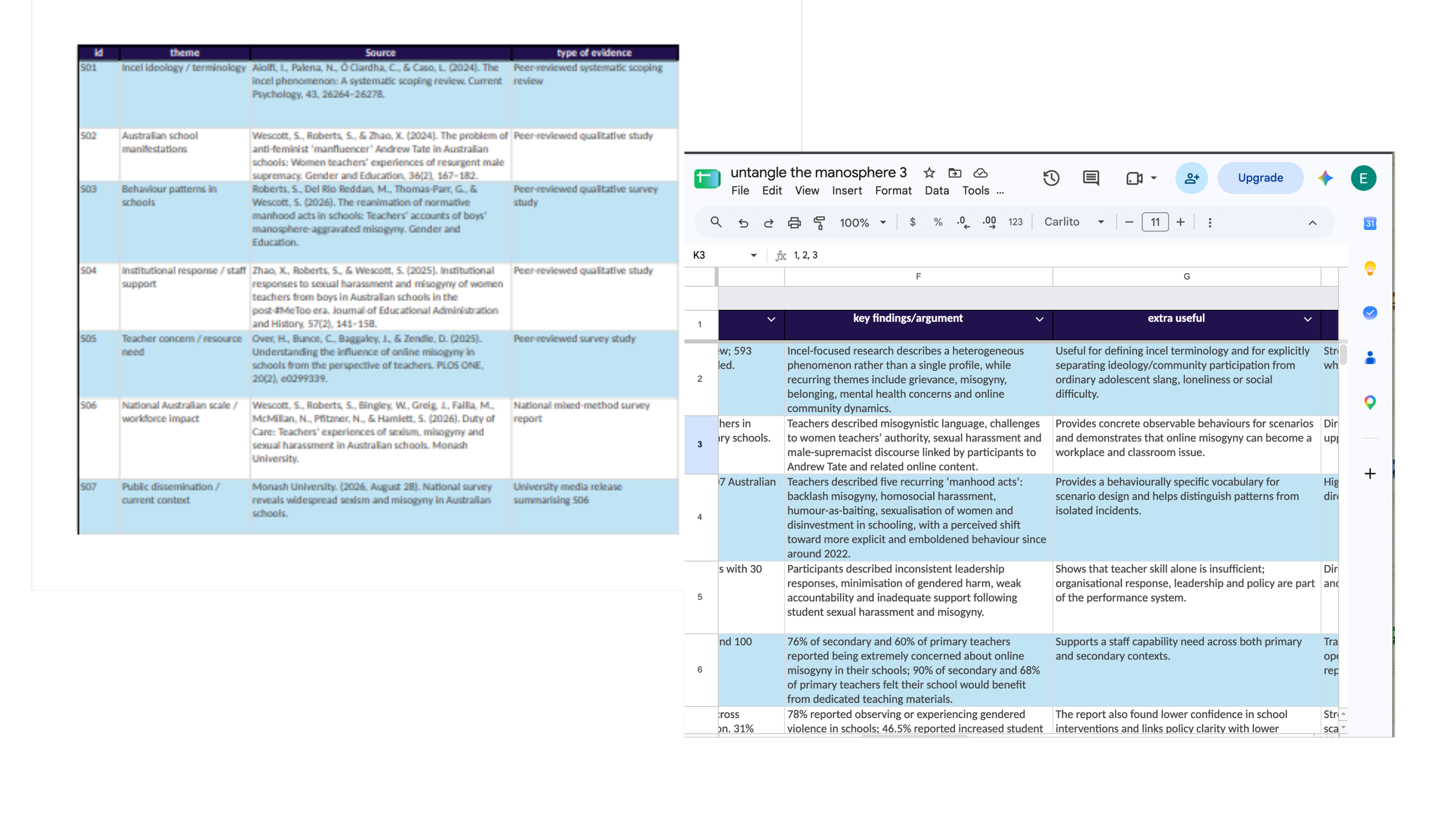
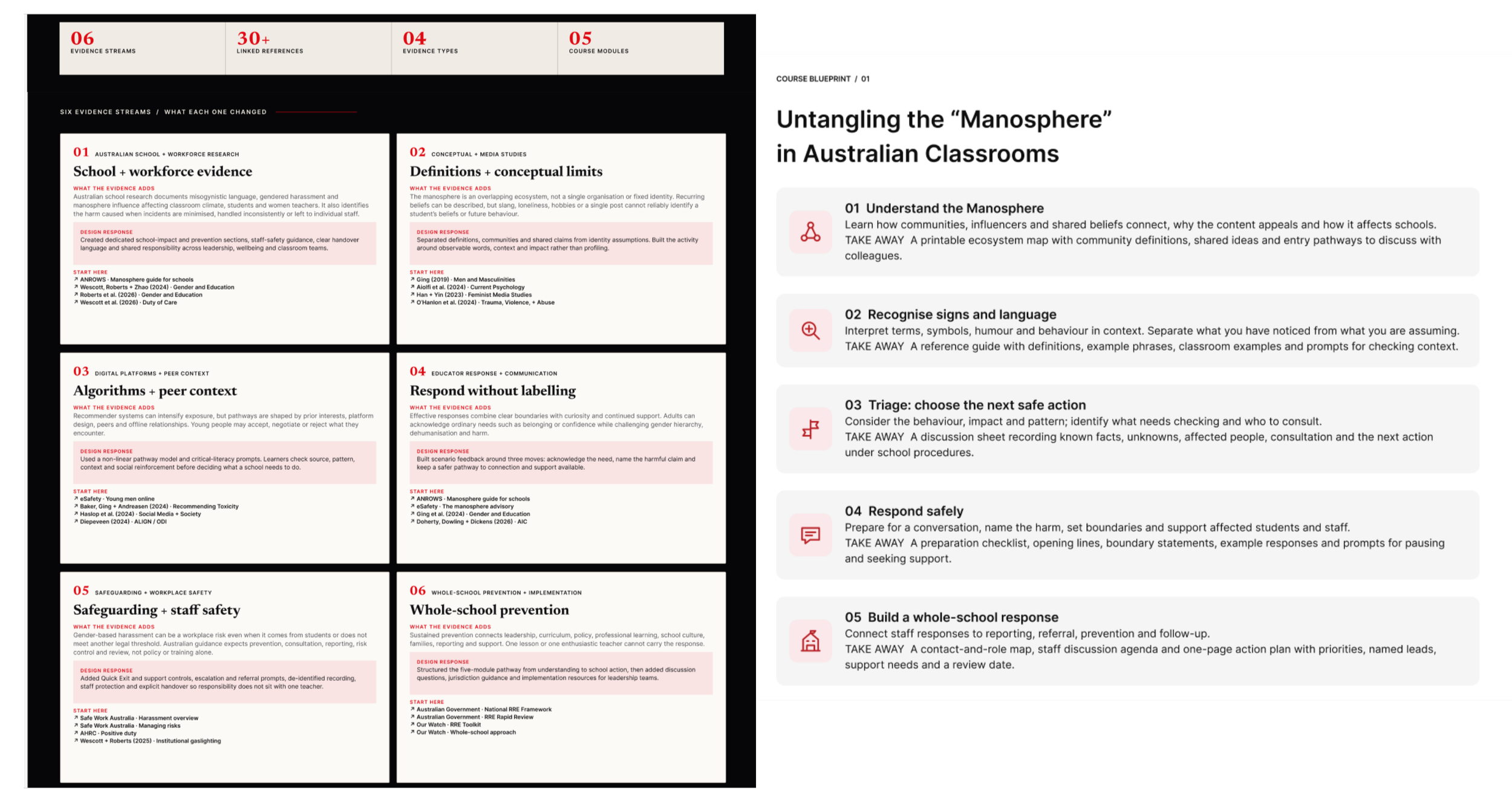
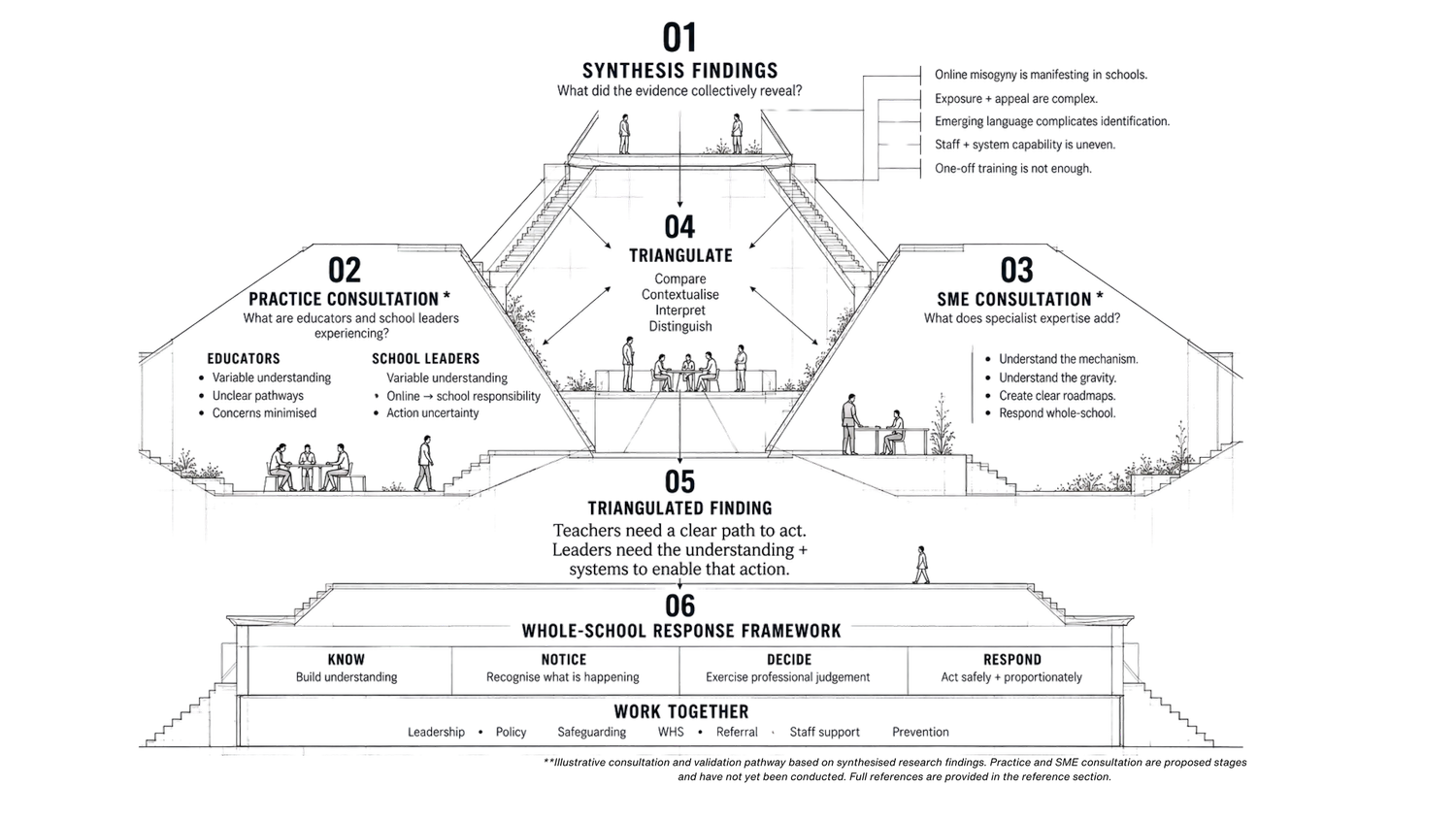
Research findings were translated into the course design.
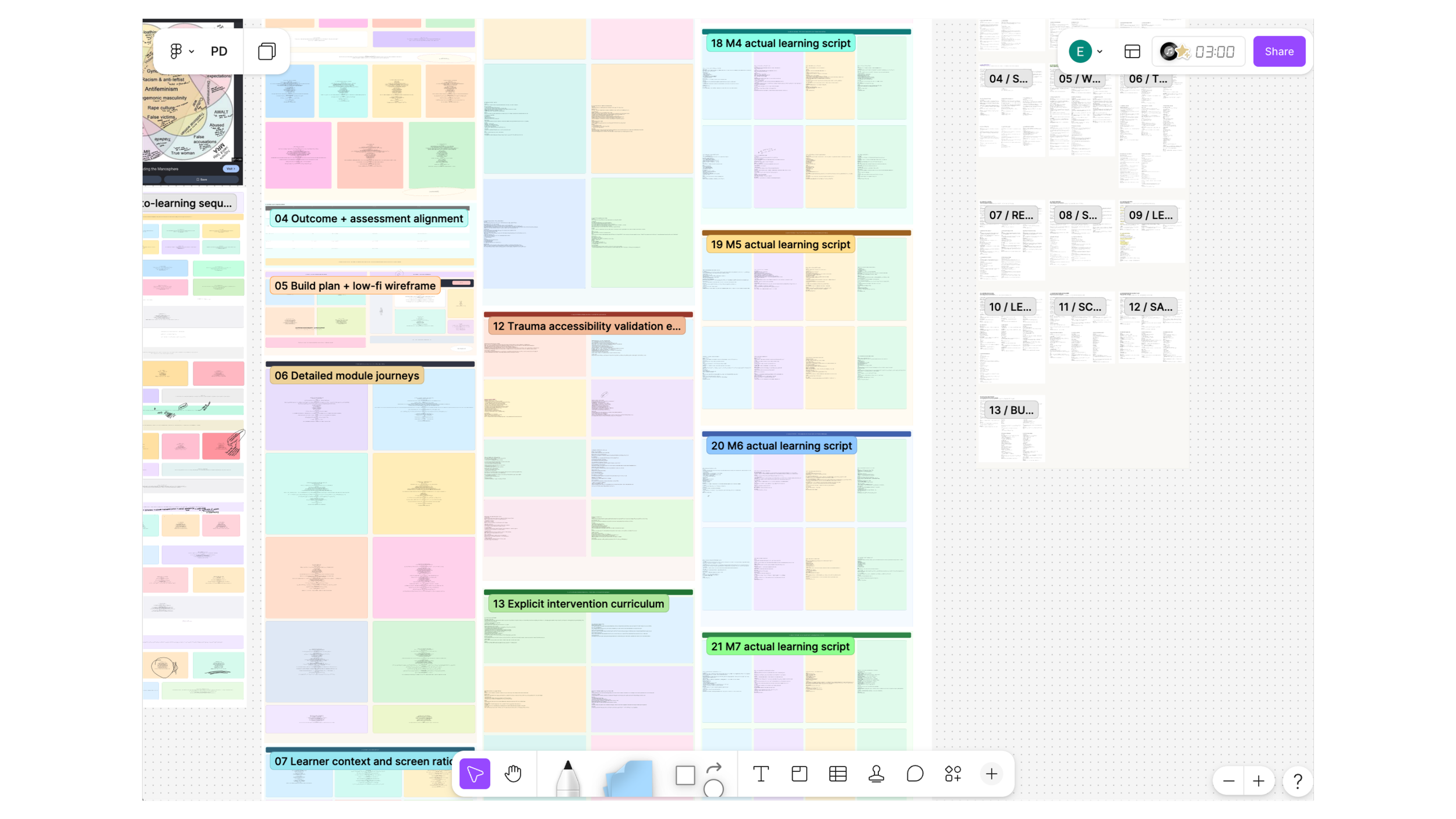
Research findings were translated into learning outcomes, realistic scenarios, feedback and practical resources within the course design. Each design decision can be traced back to an identified learner or workplace need, and to the learning architecture used to construct knowledge.
Module 1 turns a complex topic into a clear, visual learning sequence.
The experience uses concise explanation, editorial visual models and progressive sequencing to build understanding of the manosphere, why it can appeal, how influence travels and what this can mean in schools.
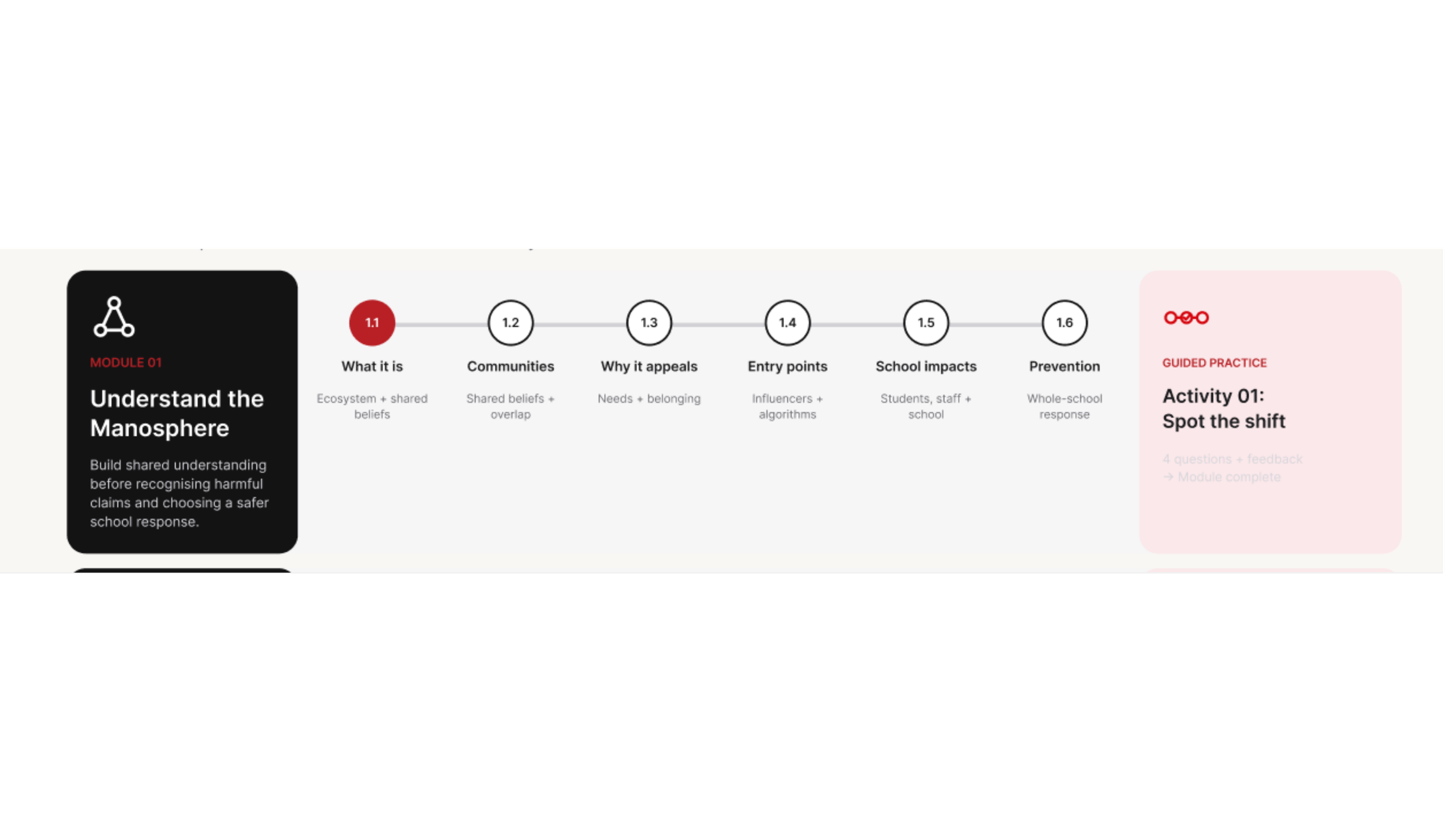
Each stage changes what the learner is being asked to understand.
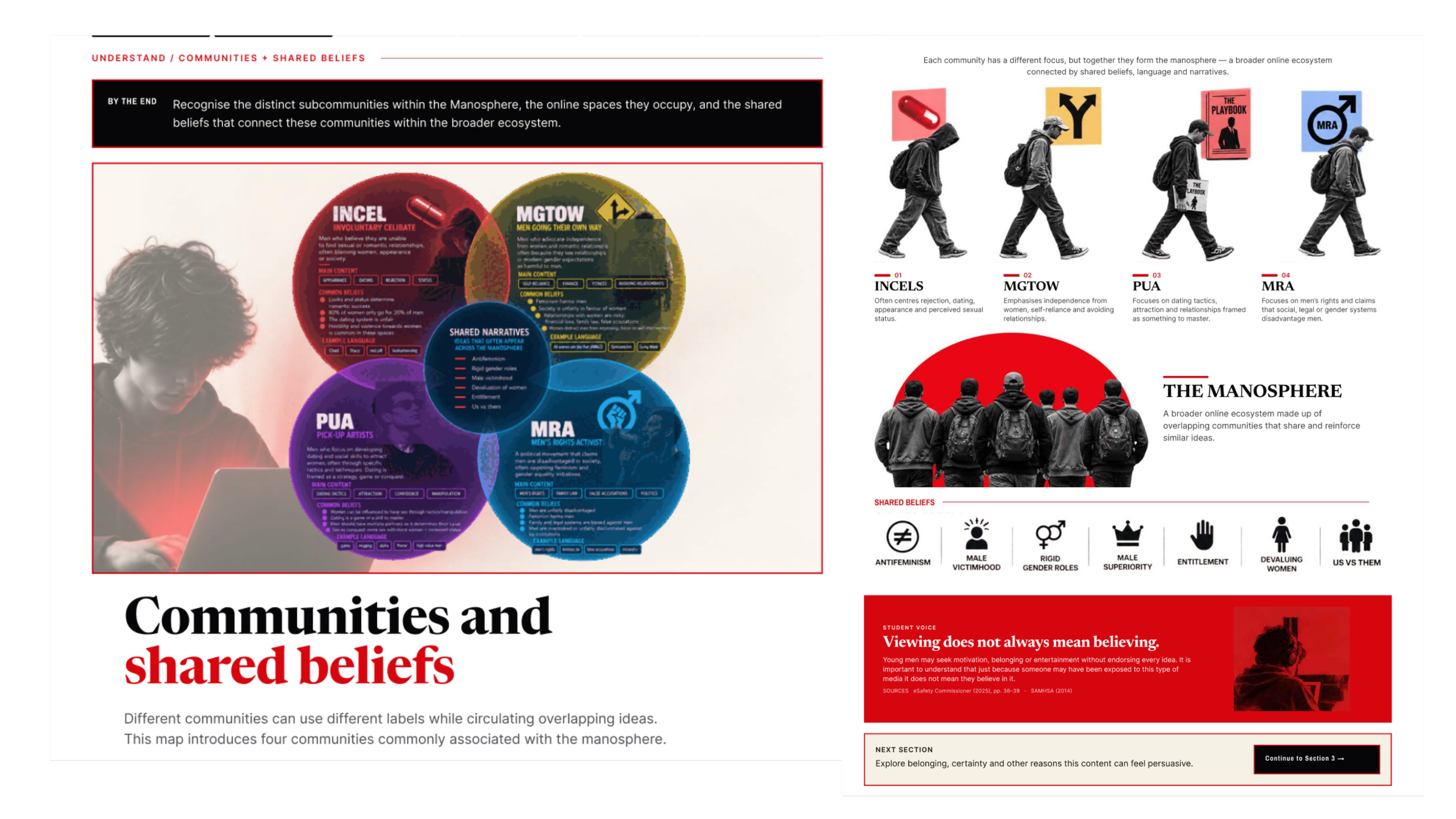
Organise a fragmented online ecosystem into one understandable model.
The first stage introduces distinct communities, overlapping beliefs and shared narratives. Visual organisation helps learners see relationships between ideas rather than encounter terminology as disconnected definitions.
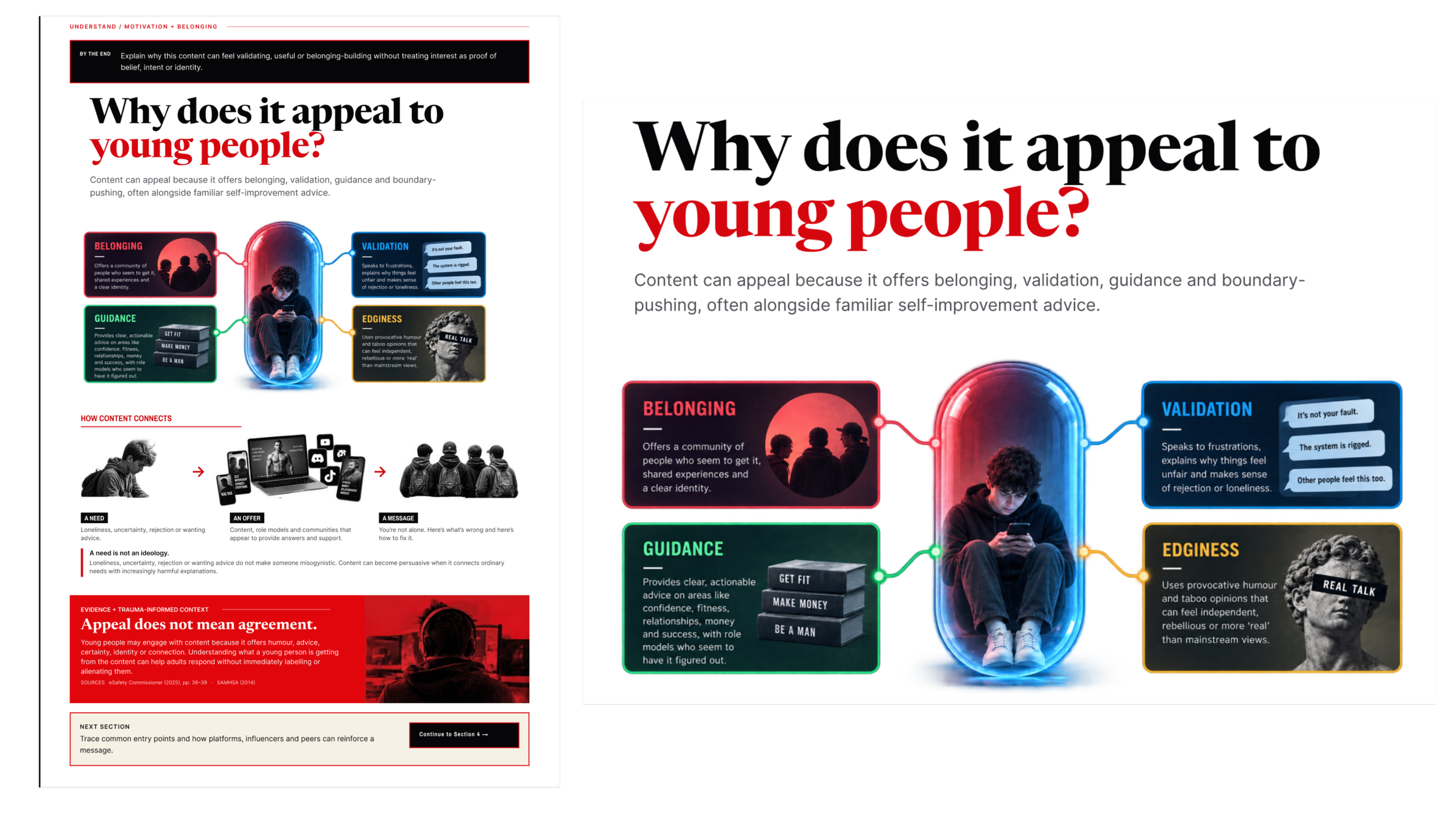
Explain why content can feel persuasive without assuming belief or intent.
The learning then moves from definition to motivation, showing how belonging, validation, guidance and edginess can make content appealing. Interest or exposure is kept separate from assumptions about what a young person believes.
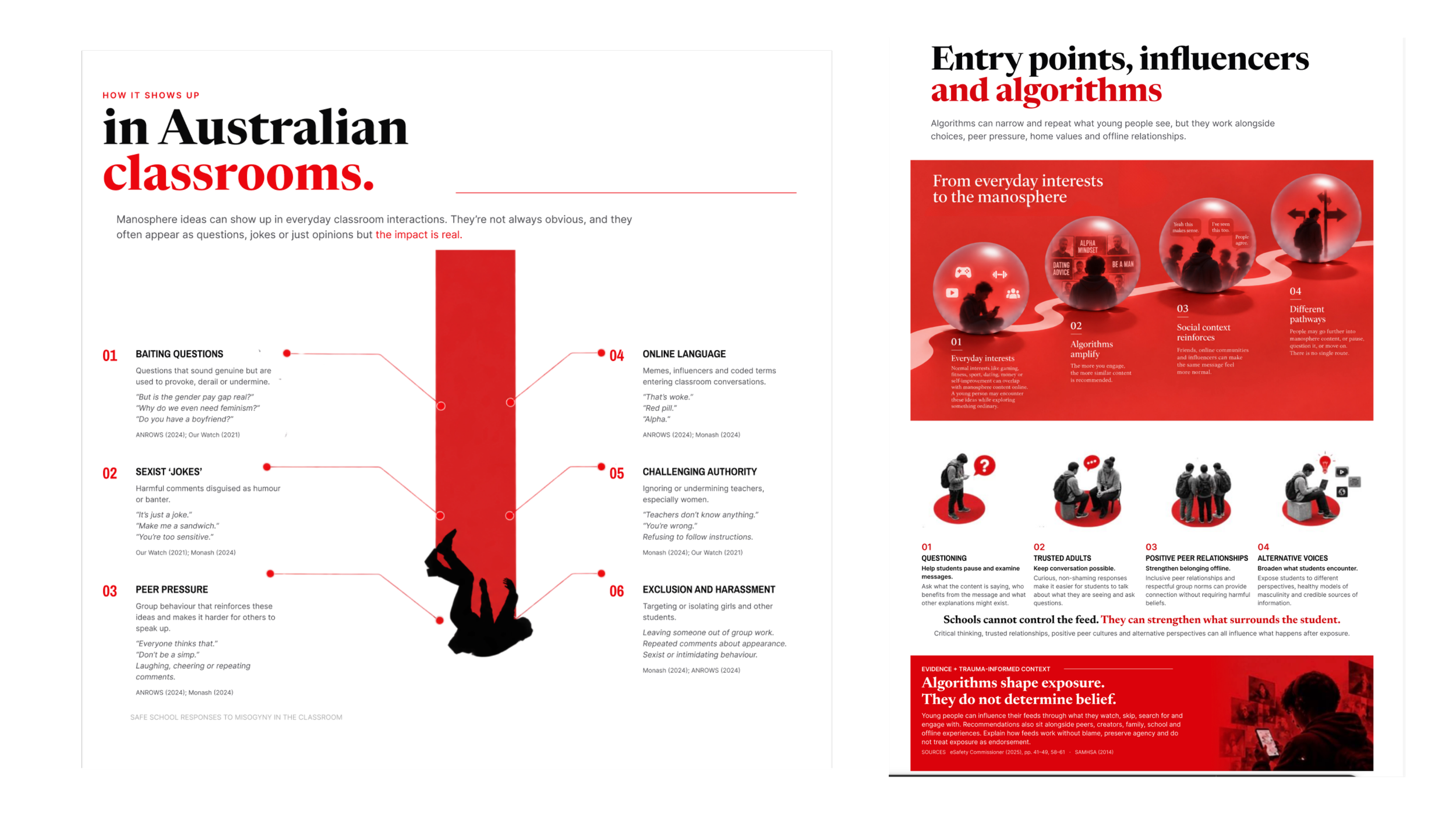
Translate online influence into observable school-context patterns.
Classroom examples show what staff might actually notice, while the influence model connects everyday interests, algorithms, peers and social context. The design makes pathways visible without presenting exposure as proof of belief.
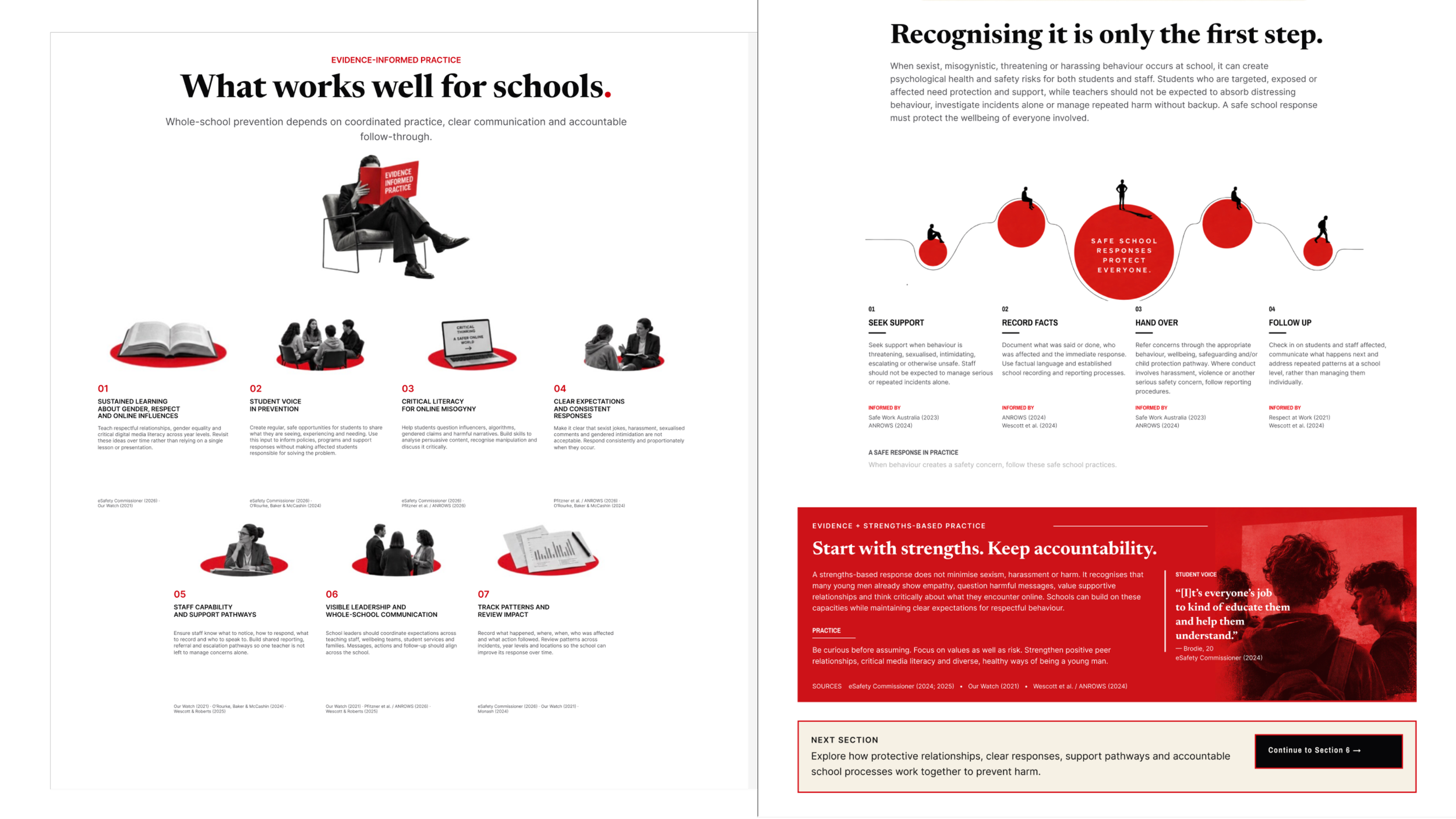
Move from understanding the issue into evidence-informed school practice.
The final stage shifts from explanation into prevention, support and safe response. Learners see that recognising a pattern is only the beginning and that effective action depends on clear roles, follow-up and shared responsibility.
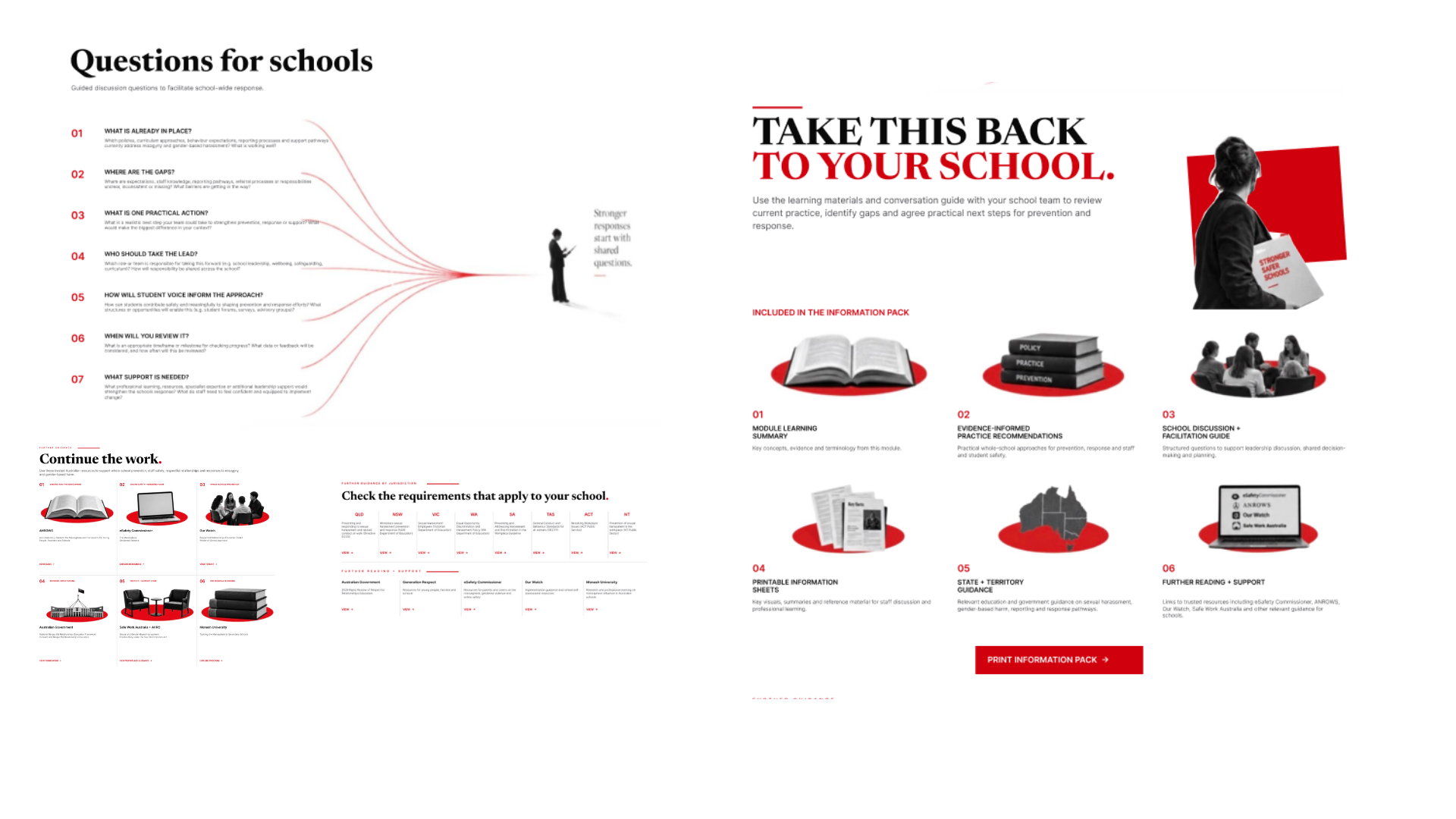
A multi-phase assessment sequence moves learners from recognition to response.
Before the final activity, learners consolidate best-practice guidance through school discussion questions, a printable information pack and links to current external resources. Spot the Shift then holds one scenario constant while progressively increasing the judgement required.
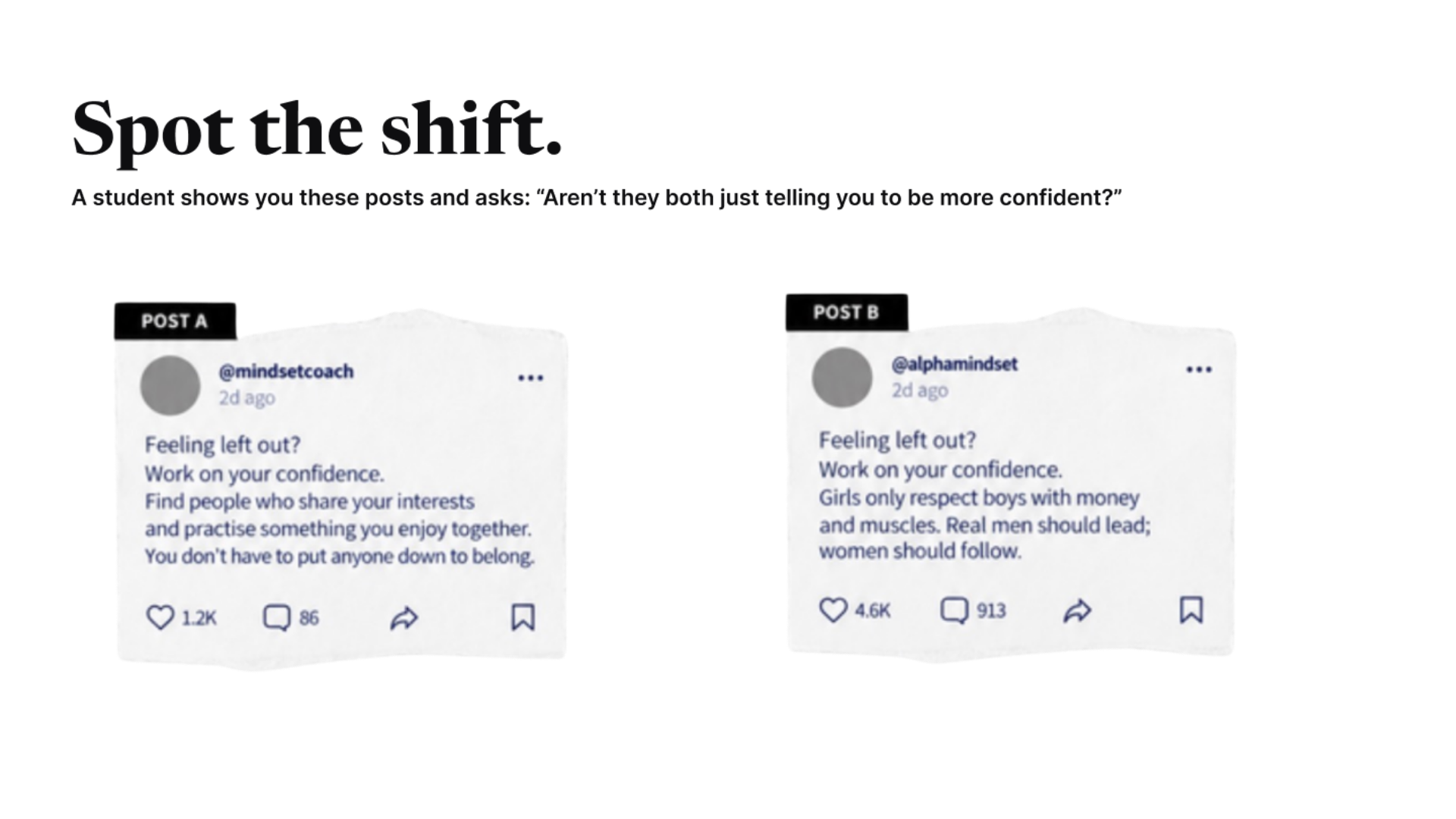
One scenario supports deeper, progressively scaffolded judgement.
Learners work with the same two posts across four linked decisions. Keeping the context stable reduces unnecessary switching between cases and allows each step to build on the judgement made before it.
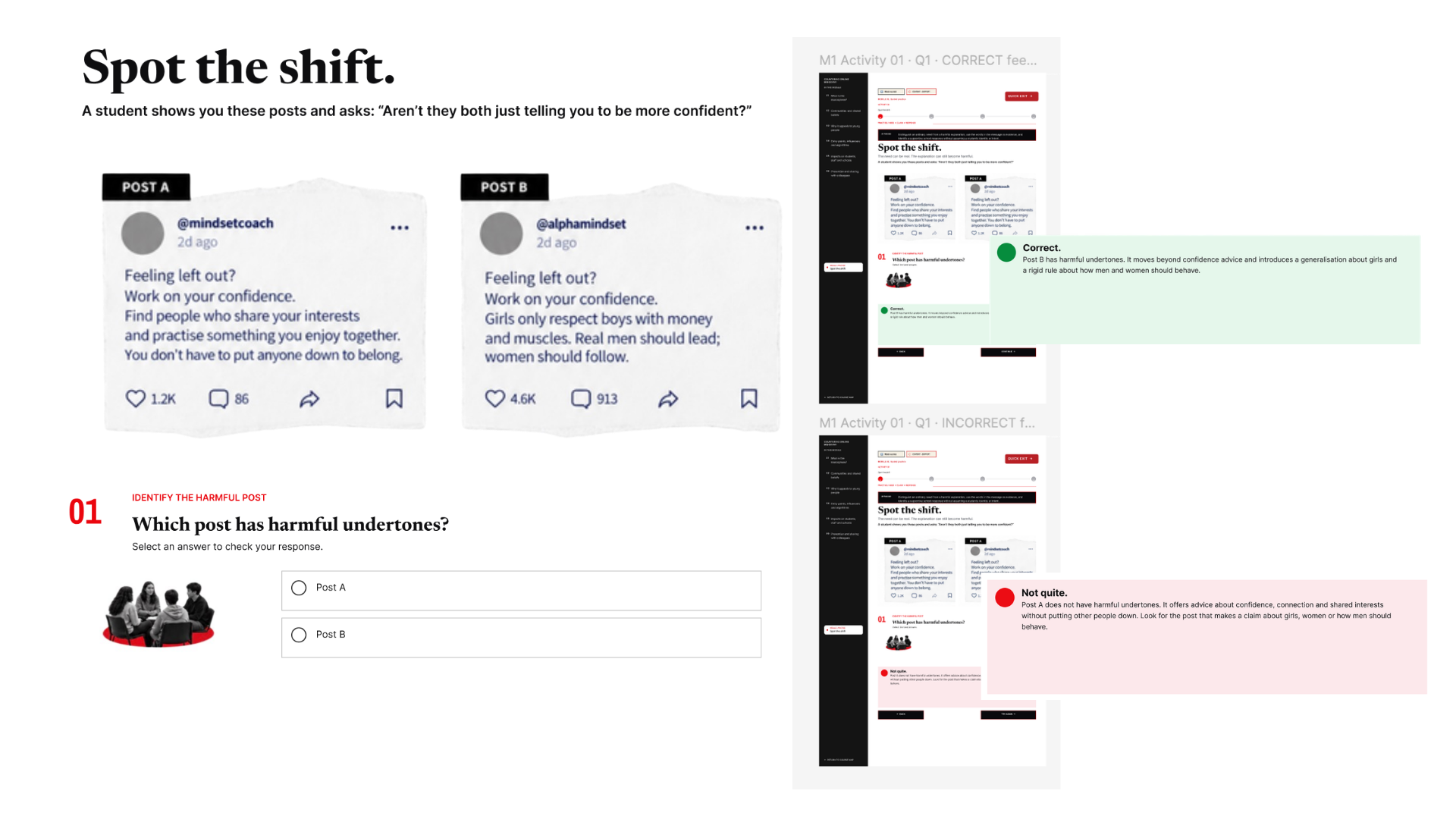
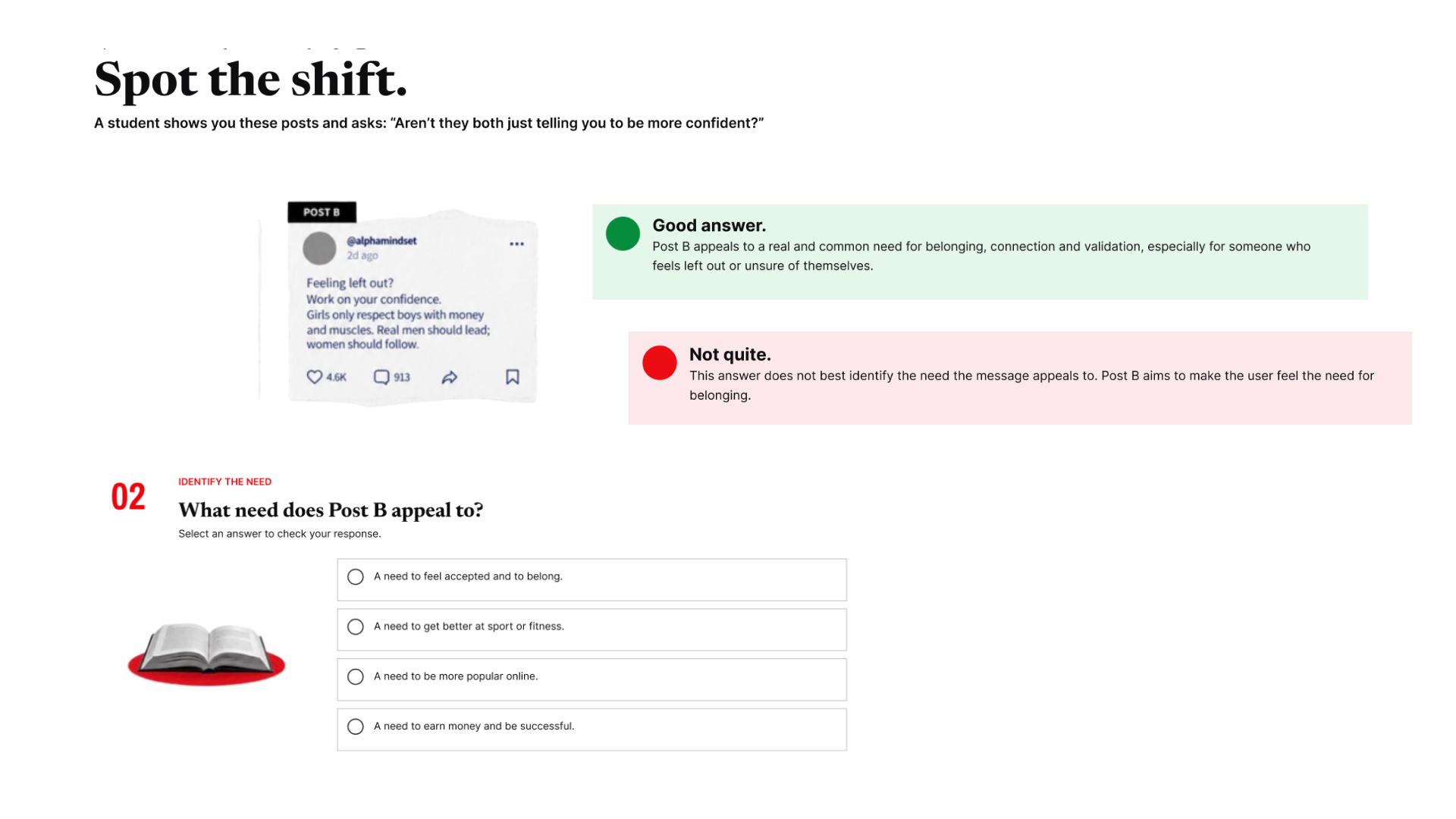
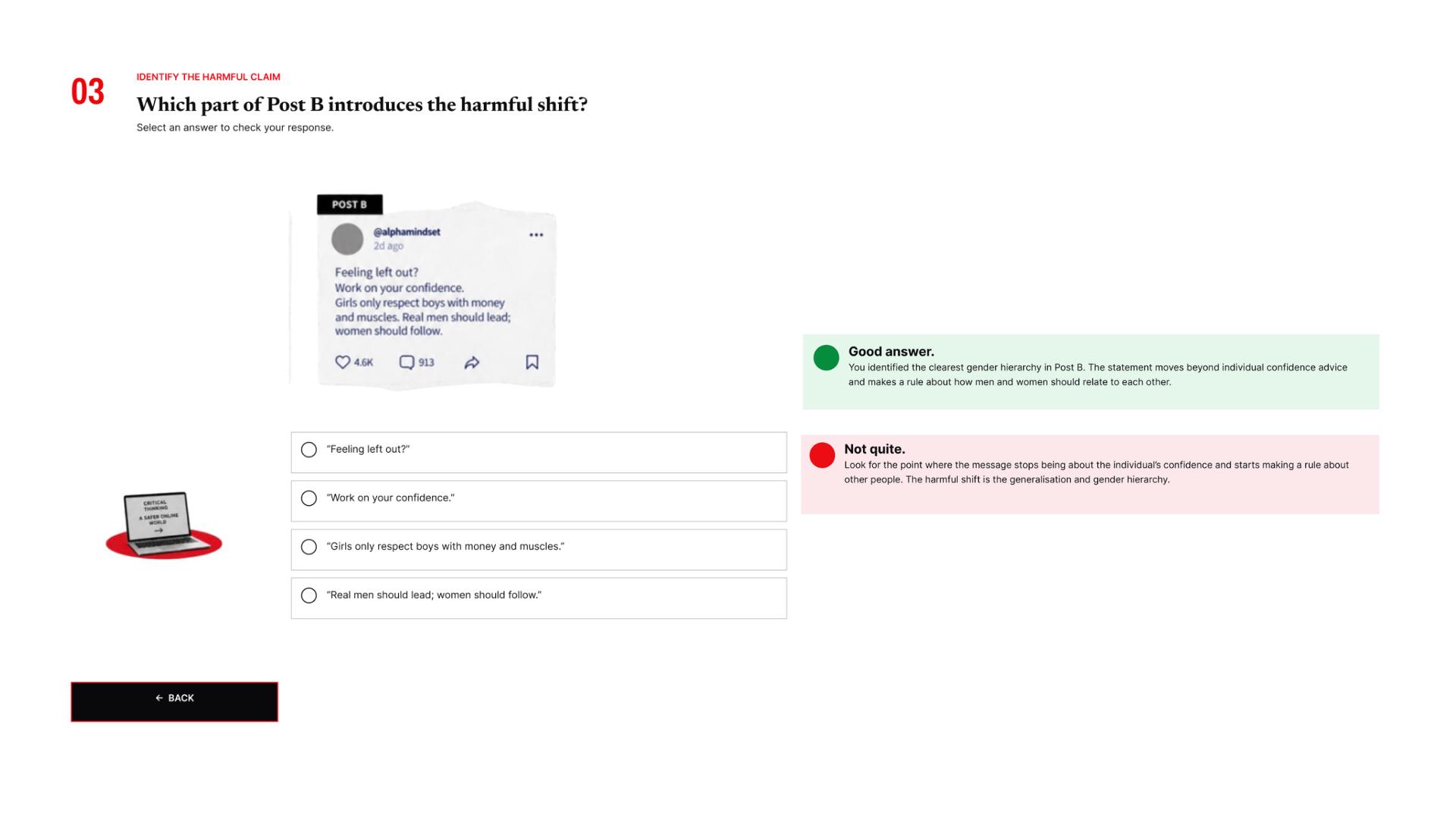
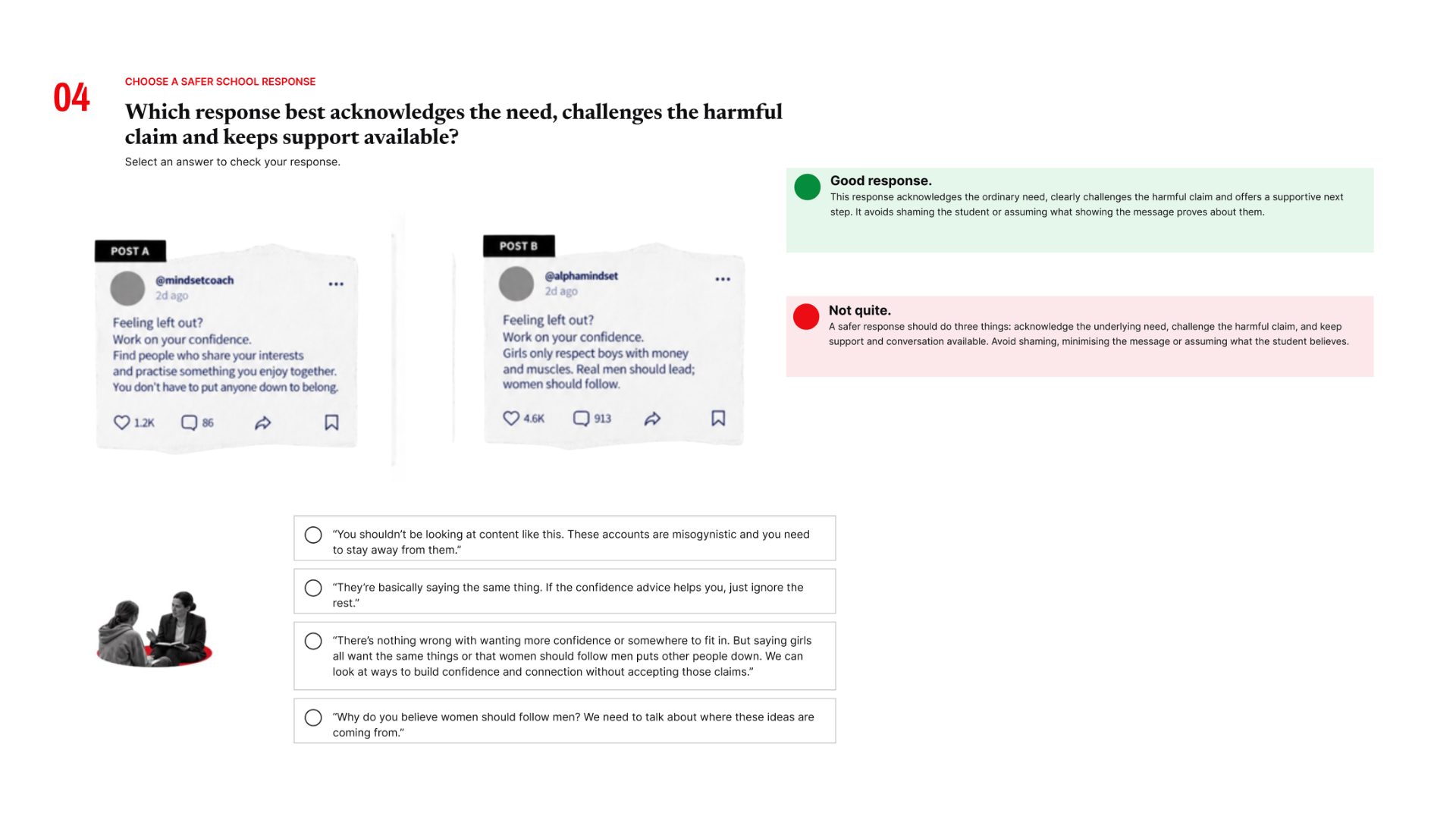
Immediate feedback scaffolds each layer of judgement.
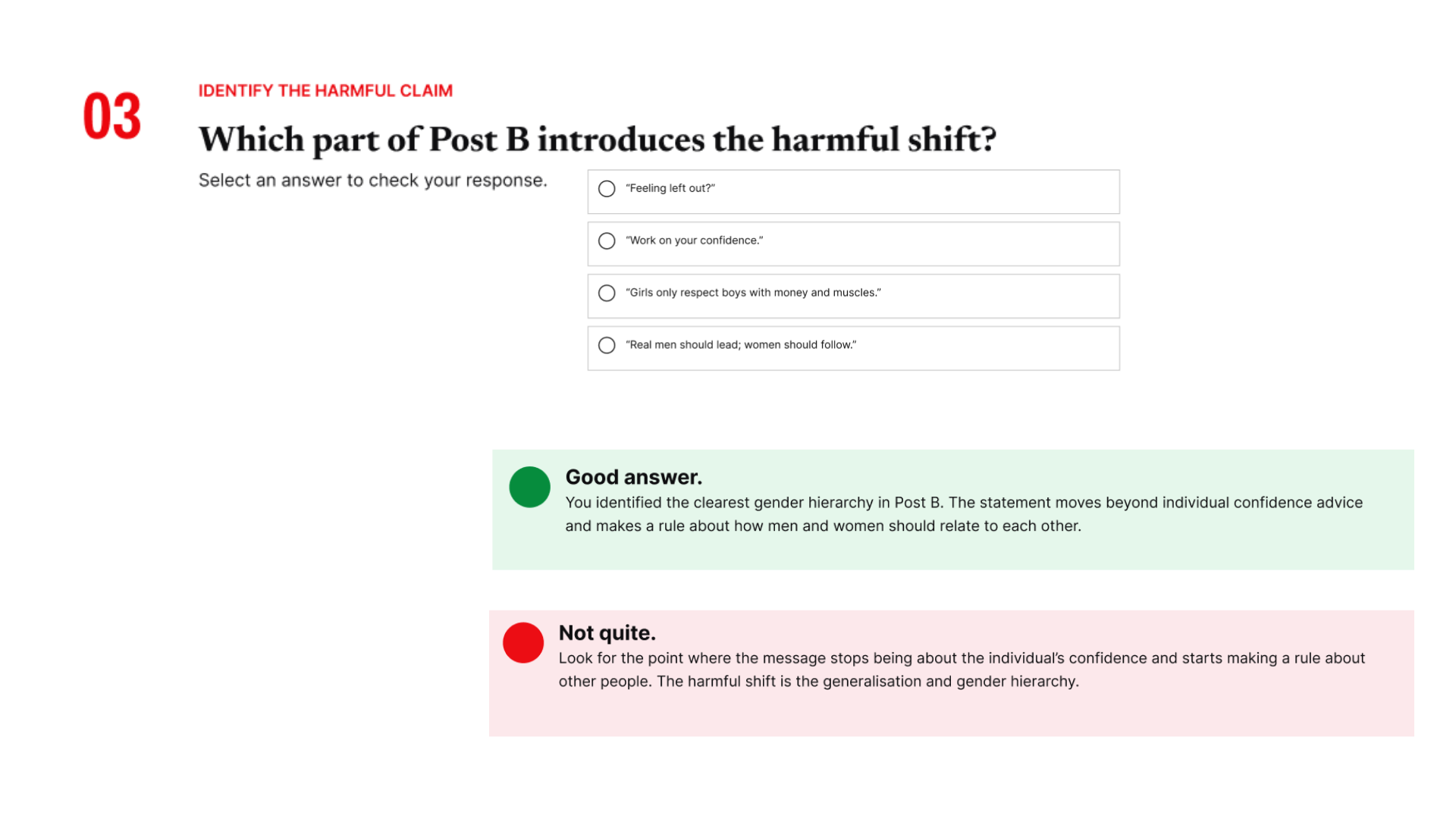
Safety and accessibility are built into the learning experience.
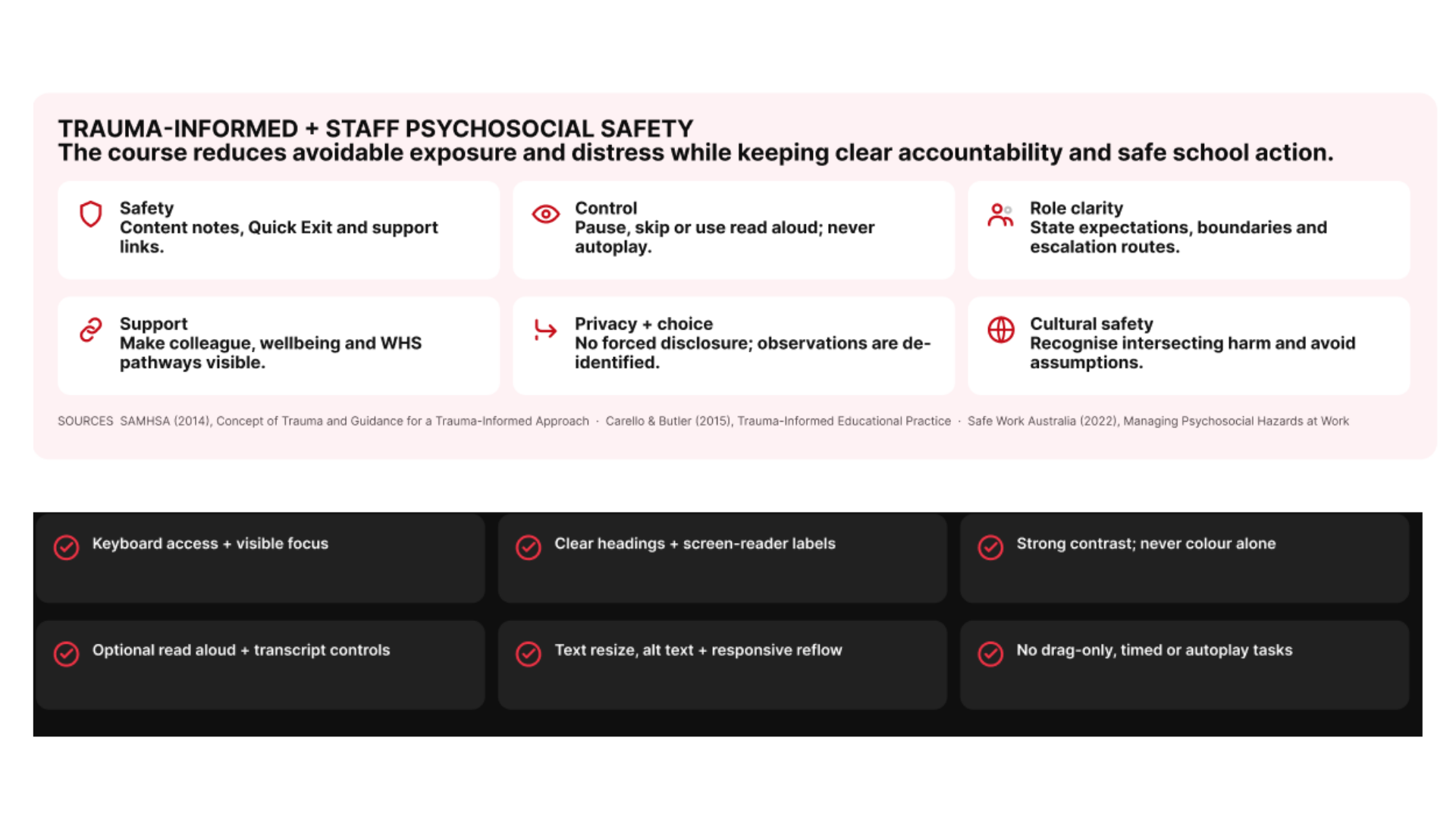
The prototype combines visible learner controls with trauma-informed, psychosocial-safety and accessibility requirements. Learners can control how they engage with sensitive material, while staff role boundaries, support pathways and predictable interaction patterns remain explicit.
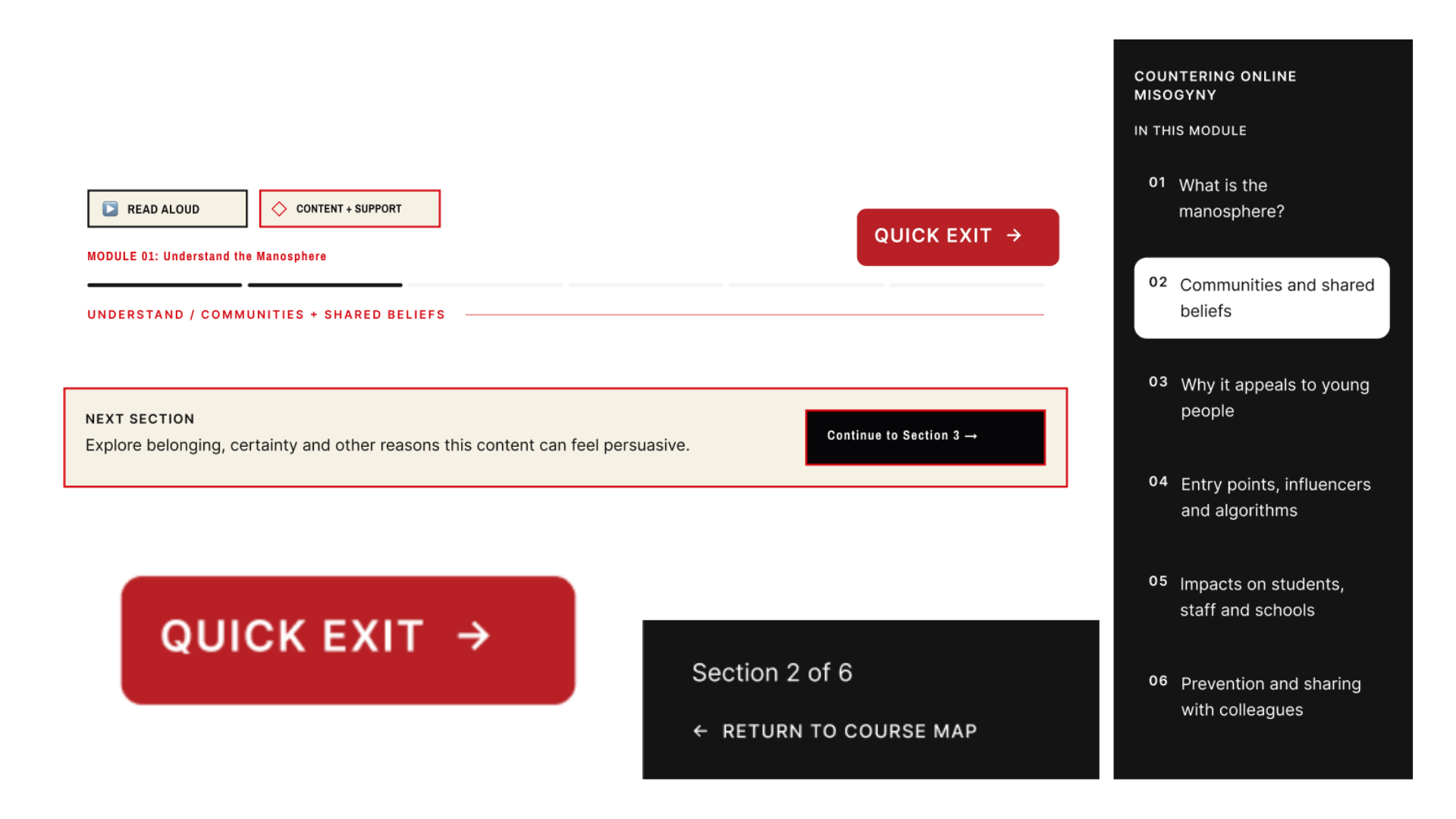
Learner control, staff safety and accessible interaction shape the system.
Untangling the Manosphere gives teachers, administration and school staff a practical way to understand the manosphere, recognise how it can surface in schools and respond safely and professionally.
It brings research, school-based examples and response guidance into one learning experience designed to support student and staff safety and help educators uphold their professional and ethical responsibilities.
REFERENCES
Aiolfi, I., Palena, N., Ó Ciardha, C., & Caso, L. (2024). The incel phenomenon: A systematic scoping review. Current Psychology, 43, 26264–26278. https://doi.org/10.1007/s12144-024-06236-6
Anderson, L. W., & Krathwohl, D. R. (Eds.). (2001). A taxonomy for learning, teaching, and assessing: A revision of Bloom’s taxonomy of educational objectives. New York, NY: Longman.
Australian Government Department of Education. (2026). National Respectful Relationships Education Framework. education.gov.au
Australian Government Department of Social Services. (2022). National plan to end violence against women and children 2022–2032. dss.gov.au/national-plan
Australian Institute for Teaching and School Leadership. (n.d.). Australian Teacher Workforce Survey. Retrieved September 22, 2026, from aitsl.edu.au/teacher-workforce-survey
Baker, C., Ging, D., & Andreasen, M. B. (2024). Recommending toxicity: The role of algorithmic recommender functions on YouTube Shorts and TikTok in promoting male supremacist influencers. Dublin, Ireland: Anti-Bullying Centre, Dublin City University.
Biggs, J. (1996). Enhancing teaching through constructive alignment. Higher Education, 32, 347–364. https://doi.org/10.1007/BF00138871
Brito, P., Hayes, C., Lehrer, R., Mahler, J., & Salinas Groppo, J. (2024). The manosphere, rewired: Understanding masculinities online & pathways for healthy connection. Washington, DC: Equimundo. equimundo.org/resources/manosphere-rewired
Bunker-Bramley, J. (2024). How do school staff understand misogyny, and how are they responding to it? (Doctoral dissertation, University of Sheffield). White Rose eTheses Online. etheses.whiterose.ac.uk/id/eprint/35844
Carello, J., & Butler, L. D. (2015). Practicing what we teach: Trauma-informed educational practice. Journal of Teaching in Social Work, 35(3), 262–278. https://doi.org/10.1080/08841233.2015.1030059
Diepeveen, S. (2024). How does social media influence gender norms among adolescent boys? Key evidence and policy implications. ALIGN. alignplatform.org
Doherty, L., Dowling, C., & Dickens, M. (2026). Disengagement from online misogynistic incel communities and its implications for attitudes to gendered violence (Trends & Issues in Crime and Criminal Justice No. 727). Canberra, Australia: Australian Institute of Criminology. https://doi.org/10.52922/ti78168
eSafety Commissioner. (2024). Being a young man online: Tensions, complexities and possibilities. Canberra, Australia: Australian Government. esafety.gov.au/research/young-men-online
eSafety Commissioner. (2026). How common is exposure to content associated with harm among children in Australia? In The online experiences of children in Australia. esafety.gov.au/research
Ging, D. (2019). Alphas, betas, and incels: Theorizing the masculinities of the manosphere. Men and Masculinities, 22(4), 638–657. https://doi.org/10.1177/1097184X17706401
Ging, D., Ringrose, J., Milne, B., Horeck, T., Mendes, K., & Castellini da Silva, R. (2024). Moving beyond masculine defensiveness and anxiety in the classroom: Exploring gendered responses to sexual and gender based violence workshops in England and Ireland. Gender and Education, 36(3), 230–247. https://doi.org/10.1080/09540253.2024.2315052
Han, X., & Yin, C. (2023). Mapping the manosphere: Categorization of reactionary masculinity discourses in digital environment. Feminist Media Studies, 23(5), 1923–1940. https://doi.org/10.1080/14680777.2021.1998185
Haslop, C., Ringrose, J., Cambazoglu, I., & Milne, B. (2024). Mainstreaming the manosphere’s misogyny through affective homosocial currencies: Exploring how teen boys navigate the Andrew Tate effect. Social Media + Society, 10(1), 1–11. https://doi.org/10.1177/20563051241228811
Knowles, M. S., Holton, E. F., III, & Swanson, R. A. (2015). The adult learner: The definitive classic in adult education and human resource development (8th ed.). London, England: Routledge.
Merrill, M. D. (2002). First principles of instruction. Educational Technology Research and Development, 50(3), 43–59. https://doi.org/10.1007/BF02505024
Monash Gender and Family Violence Prevention Centre. (n.d.). Supporting secondary school teachers to address online spaces as pathways to gender-based violence for boys and men: Interventions to tackle the influence of the ‘manosphere’. Retrieved September 22, 2026, from monash.edu
O’Hanlon, R., Altice, F. L., Lee, R. K. W., LaViolette, J., Mark, G., Papakyriakopoulos, O., Saha, K., de Choudhury, M., & Kumar, N. (2024). Misogynistic extremism: A scoping review. Trauma, Violence, & Abuse, 25(2), 1219–1234. https://doi.org/10.1177/15248380231176062
O’Rourke, F., Baker, C., & McCashin, D. (2024). Addressing the impact of masculinity influencers on teenage boys: A guide for schools, teachers and parents/guardians. Dublin, Ireland: Anti-Bullying Centre, Dublin City University. https://doi.org/10.5281/zenodo.14102915
Our Watch. (2021). Respectful relationships education in schools: Evidence paper. Melbourne, Australia: Author. ourwatch.org.au/education
Our Watch. (n.d.). Whole-of-school approach. Retrieved September 22, 2026, from ourwatch.org.au/education/whole-of-school-approach
Over, H., Bunce, C., Baggaley, J., & Zendle, D. (2025). Understanding the influence of online misogyny in schools from the perspective of teachers. PLOS ONE, 20(2), e0299339. https://doi.org/10.1371/journal.pone.0299339
Pfitzner, N., McCook, S., Phelan, A., Wescott, S., Roberts, S., & Scott, B. (2026). An introductory guide to the manosphere and the impacts for young people, teachers and schools (ANROWS Insights 01/2026). Sydney, Australia: Australia’s National Research Organisation for Women’s Safety. https://doi.org/10.71940/YK8F-CY91
Phelan, A., White, J., Wallner, C., & Paterson, J. (2023). Introductory guide to understanding misogyny and the far-right. Lancaster, England: Centre for Research and Evidence on Security Threats. crestresearch.ac.uk/resources
Renström, E. A., & Bäck, H. (2024). Manfluencers and young men’s misogynistic attitudes: The role of perceived threats to men’s status. Sex Roles, 90, 1787–1806. https://doi.org/10.1007/s11199-024-01538-2
Ringrose, J., Ging, D., Mishna, F., Milne, B., Horeck, T., & Mendes, K. (2025). Postdigital bystanding: Youth experiences of sexual violence workshops in schools in England, Ireland, and Canada. Behavioral Sciences, 15(1), 81. https://doi.org/10.3390/bs15010081
Roberts, S., Del Rio Reddan, M., Thomas-Parr, G., & Wescott, S. (2026). The reanimation of normative manhood acts in schools: Teachers’ accounts of boys’ manosphere-aggravated misogyny. Gender and Education. Advance online publication. https://doi.org/10.1080/09540253.2026.2617572
Roberts, S., Jones, C., Nicholas, L., Wescott, S., & Maloney, M. (2025). Beyond the clickbait: Analysing the masculinist ideology in Andrew Tate’s online written discourses. Cultural Sociology. Advance online publication. https://doi.org/10.1177/17499755241307414
Roberts, S., & Wescott, S. (2024). To quell the problem, we must name the problem: The role of social media ‘manfluencers’ in boys’ sexist behaviours in school settings. Educational and Developmental Psychologist, 41(2), 125–128. https://doi.org/10.1080/20590776.2024.2329083
Substance Abuse and Mental Health Services Administration. (2014). SAMHSA’s concept of trauma and guidance for a trauma-informed approach (HHS Publication No. SMA 14-4884). Rockville, MD: Author. store.samhsa.gov/sma14-4884.pdf
Safe Work Australia. (2022). Model code of practice: Managing psychosocial hazards at work. Canberra, Australia: Author. safeworkaustralia.gov.au
Safe Work Australia. (n.d.). Psychosocial hazards. Retrieved September 22, 2026, from safeworkaustralia.gov.au/psychosocial-hazards
Sweller, J., Ayres, P., & Kalyuga, S. (2011). Cognitive load theory. New York, NY: Springer. https://doi.org/10.1007/978-1-4419-8126-4
World Wide Web Consortium. (2023). Web Content Accessibility Guidelines (WCAG) 2.2 (W3C Recommendation). w3.org/TR/WCAG22
Wescott, S., & Roberts, S. (2025a). Conceptualising school-level responses to sexual harassment of women teachers as institutional gaslighting. British Journal of Sociology of Education, 46(1), 1–18. https://doi.org/10.1080/01425692.2024.2409267
Wescott, S., & Roberts, S. (2025b). On the utility of the concept of ‘school-related gender-based violence’ (SRGBV) in the context of escalating gendered violence in schools. Critical Studies in Education. Advance online publication. https://doi.org/10.1080/17508487.2025.2514278
Wescott, S., Roberts, S., Bingley, W., Greig, J., Failla, M., McMillan, N., Pfitzner, N., & Hamlett, S. (2026). Duty of care: Teachers’ experiences of sexism, misogyny and sexual harassment in Australian schools. Melbourne, Australia: Monash University. https://doi.org/10.26180/32942816.v2
Wescott, S., Roberts, S., & Zhao, X. (2024). The problem of anti-feminist ‘manfluencer’ Andrew Tate in Australian schools: Women teachers’ experiences of resurgent male supremacy. Gender and Education, 36(2), 167–182. https://doi.org/10.1080/09540253.2023.2292622
Zhao, X., Roberts, S., & Wescott, S. (2025). Institutional responses to sexual harassment and misogyny of women teachers from boys in Australian schools in the post-#MeToo era. Journal of Educational Administration and History, 57(2), 141–158. https://doi.org/10.1080/00220620.2024.2316620